Saltaire’s Heritage: Hockney and Random Reminiscences

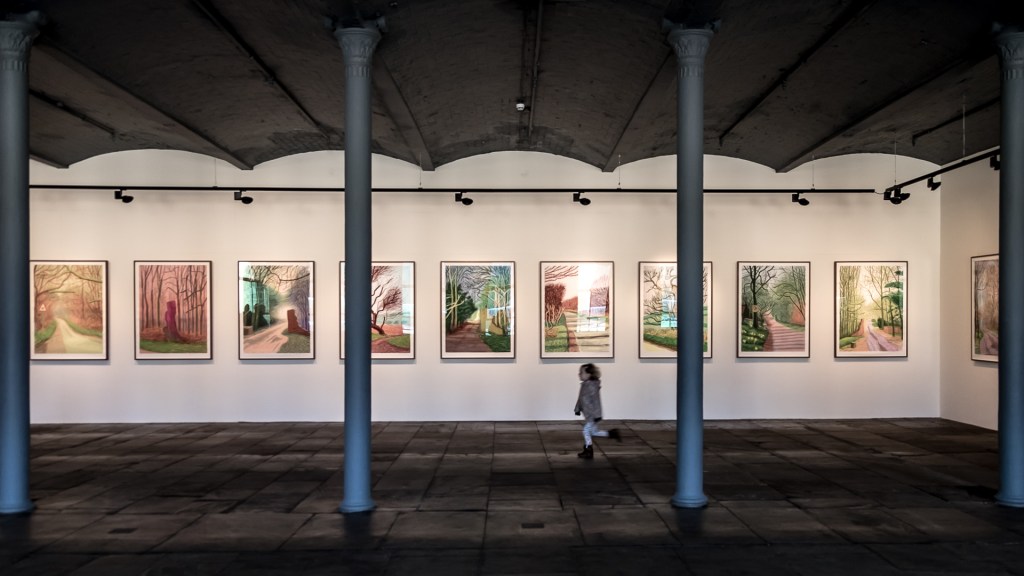
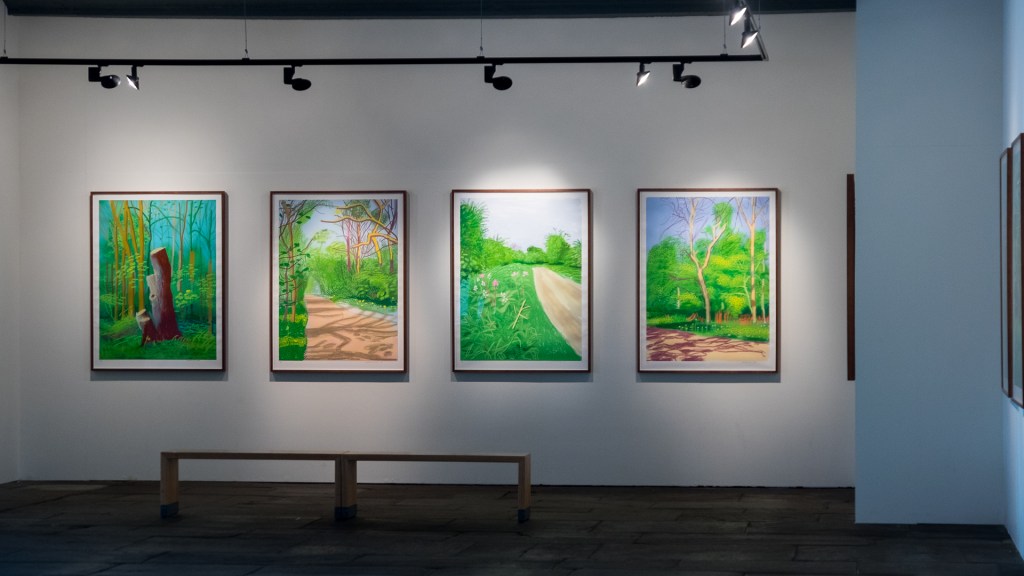
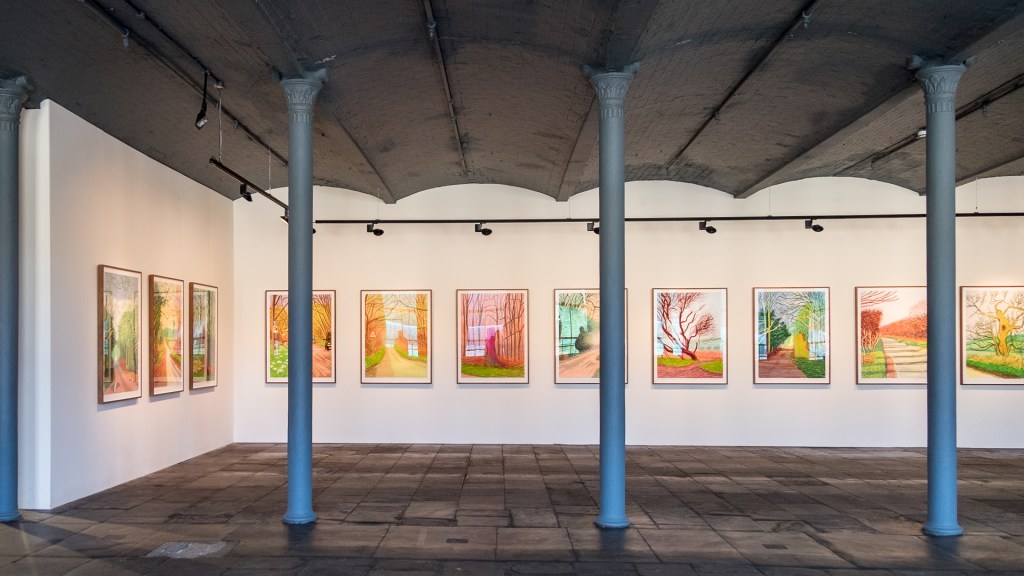
The death of David Hockney this week has made many headlines and brought some wonderful tributes to a great artist. I can’t add anything of significance to those but I do just want to acknowledge the joy that so many of his images have brought me and so many others. Prints of Garrowby Hill and a letterbox format ‘Arrival of Spring in Woldgate’ have brightened our sitting room for some years now. Thank you, David, for the joyous images and for setting a wonderful example of always seeking new ways to express your art.

A number of feature articles and obituaries have mentioned Salt’s Mill (now often styled without apostrophe but I’m old-school) in Saltaire and that has had me reminiscing in the rather random way of this blog…

I used to live with my family just up the hillside above Saltaire, West Yorkshire, from 1965-1973. The mill was still a place of work then – it didn’t close until 1986. Saltaire is a model village, established by industrialist and politician Sir Titus Salt, and since 2001 a UNESCO World Heritage site, and justifiably so.

For me, Saltaire meant many things…Firstly, the Methodist chapel on Sundays – 2 or 3 times – morning and evening services with my mum (both in choir) & dad and teaching Sunday School after lunch for me. Dad would probably shoot off to collect Gran and/or an elderly aunt to join us for tea. How my parents juggled all this still fills me with admiration.

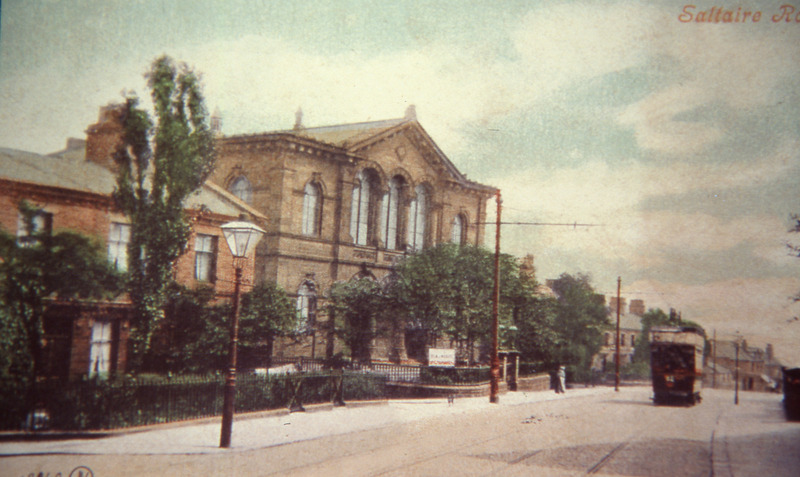
Saltaire Methodist (Bowtell Collection, Saltaire Collection)

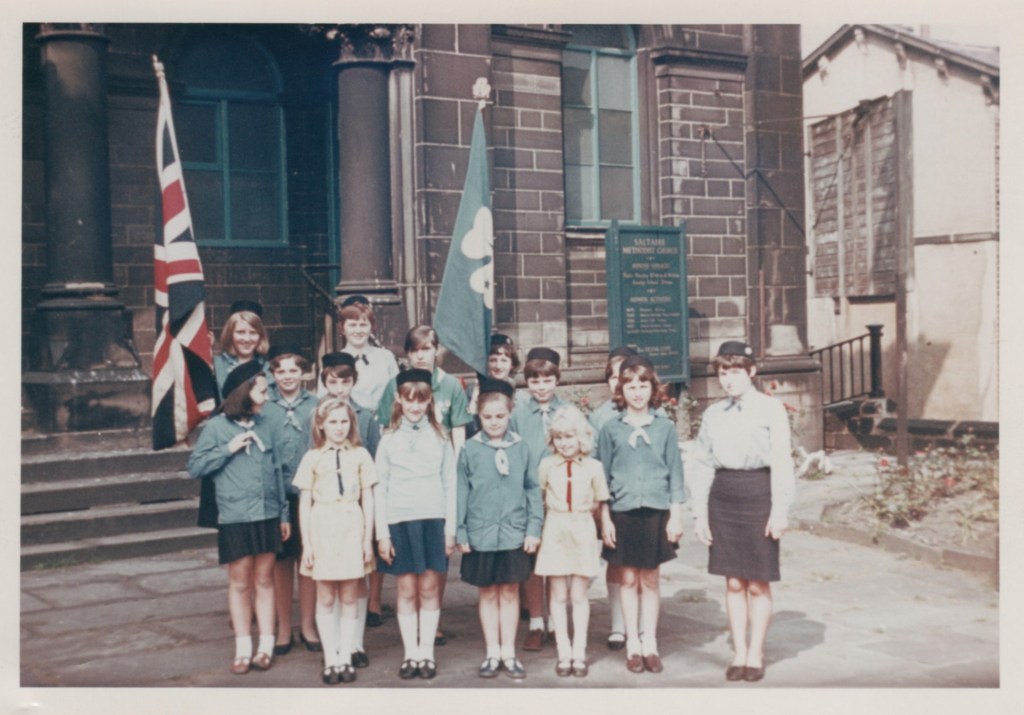
When I was about 14 it was decided to form a Guide unit at the church and I was roped in, partly I think as additional support for the Guider and her assistant as most of the other girls were rather younger. That was another visit to chapel, as was the weekly choir practice, or as on this occasion, double-booking of choir and Sunday morning church parade!

Guide company outside chapel, ready for church parade with Union flag and Guide standard.
Newly formed Guide company ca 1969 in front of the original Saltaire Wesleyan Methodist chapel, ready for church parade.

This was the original chapel, sadly demolished in 1970 to make was for a more practical and affordable building. Fortunately the rather splendid organ was saved and went to a new home. I was given permission to go and play the organ in that last year or so after a brief introduction to the impressive instrument; I didn’t have lessons, which I regretted later, but thoroughly enjoyed working my way through the Methodist Hymn Book and a few other pieces. I was tinkering with ‘I bind unto myself today‘ when I heard a cough. Rev. Evans was standing at the back, having popped in to see what was going on; he nodded and said “Ah, St Patrick’s Breastplate,” fortunately recognising the tune, but then added “A trifle dented, I fear!” I didn’t persist with the organ!

On a Saturday with a few weeks’ pocket money savings burning a hole, I would wend my way with a friend, another Ruth, to the Llama Shop opposite the mill, by the station (originally the Dining Room, I believe, now part of Shipley College), where they sold fabric and clothes from the alpaca mill – mostly seconds or otherwise a bargain. I remember acquiring a heather-purple woollen bouclé maxi-coat that I reckon weighed as much as a decent suit of armour, but I thought I was the bee’s knees!

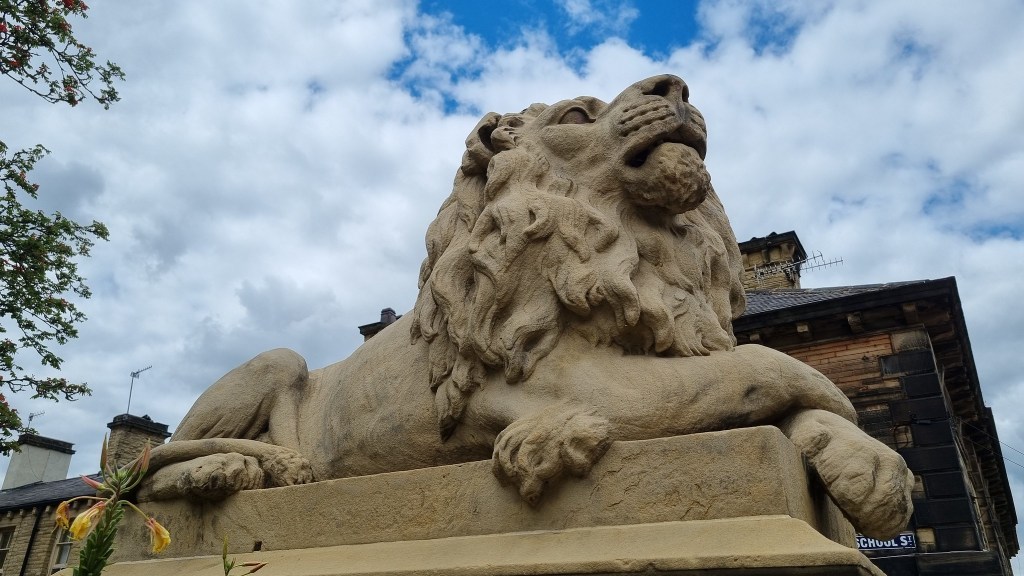
More regularly for me on Saturdays the main Saltaire attraction was the library, and I would greet the Trafalgar Square “reject” lions en route. I think I worked my way through the entire Sci Fi section in fairly short order, and moved on from there, being a voracious reader.

All of this reminiscence is a long way from Hockney and his work; I must draw the ramble to a close. I was pleased to see the late Jonathan Silver take on the mill shortly after its closure in the 80s and develop it into the enterprise it is today. Salt’s Mill is still a family affair and the Hockney collection is enviable. We almost always visit when we head back to Yorkshire – not as often as I would like these days.

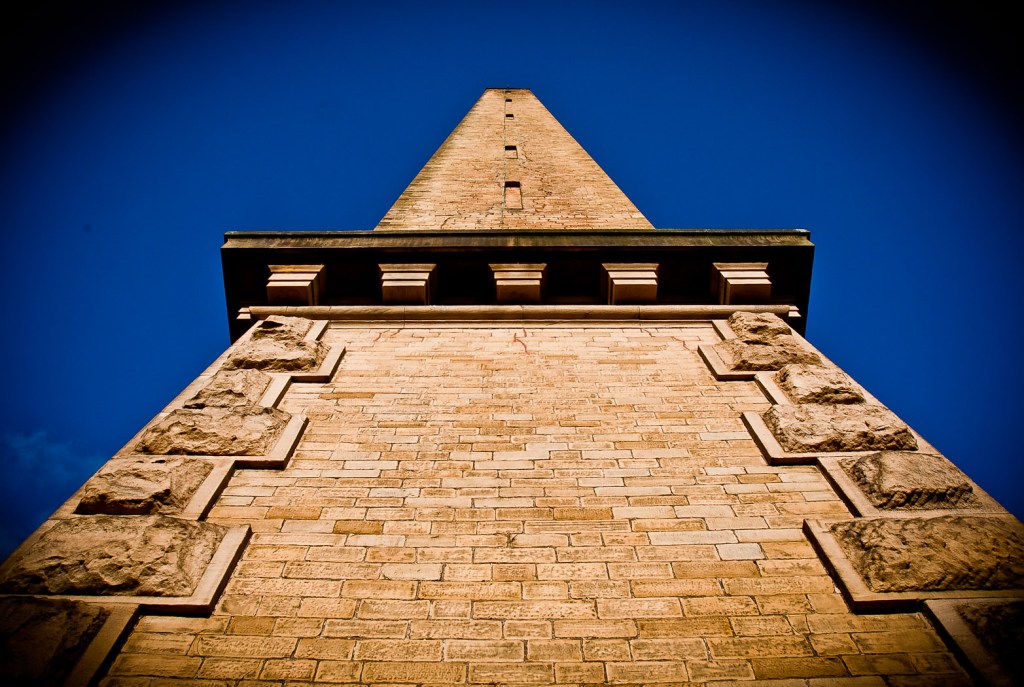
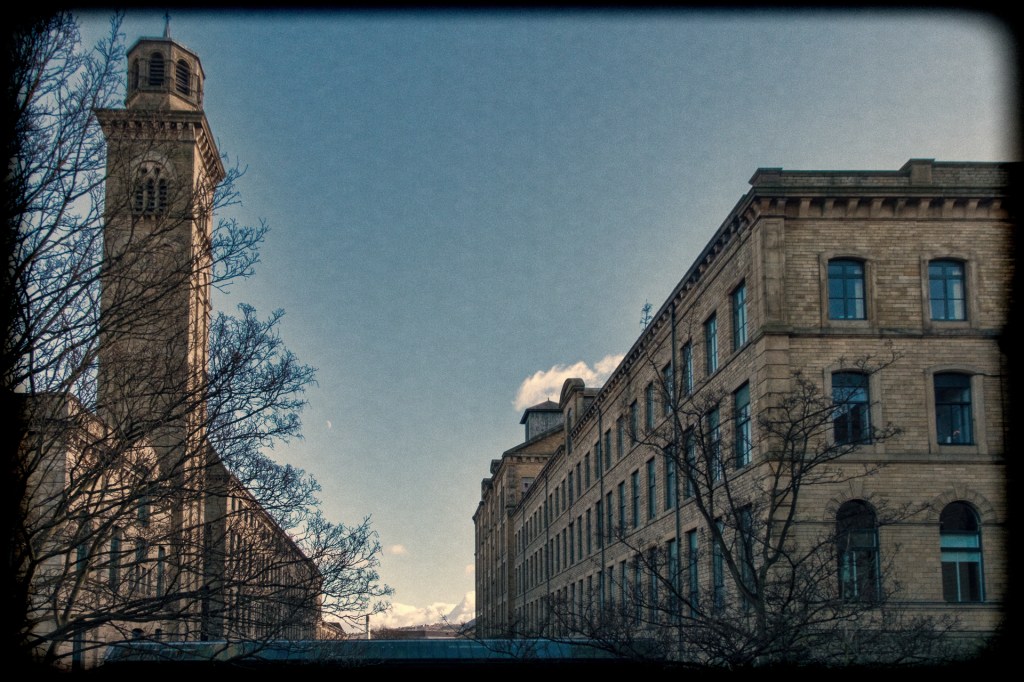
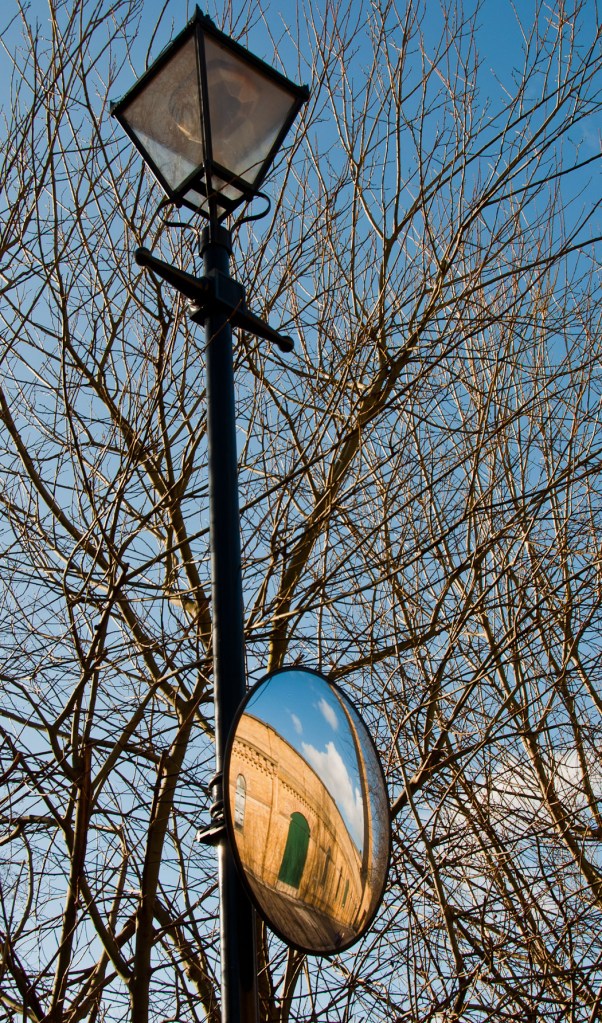
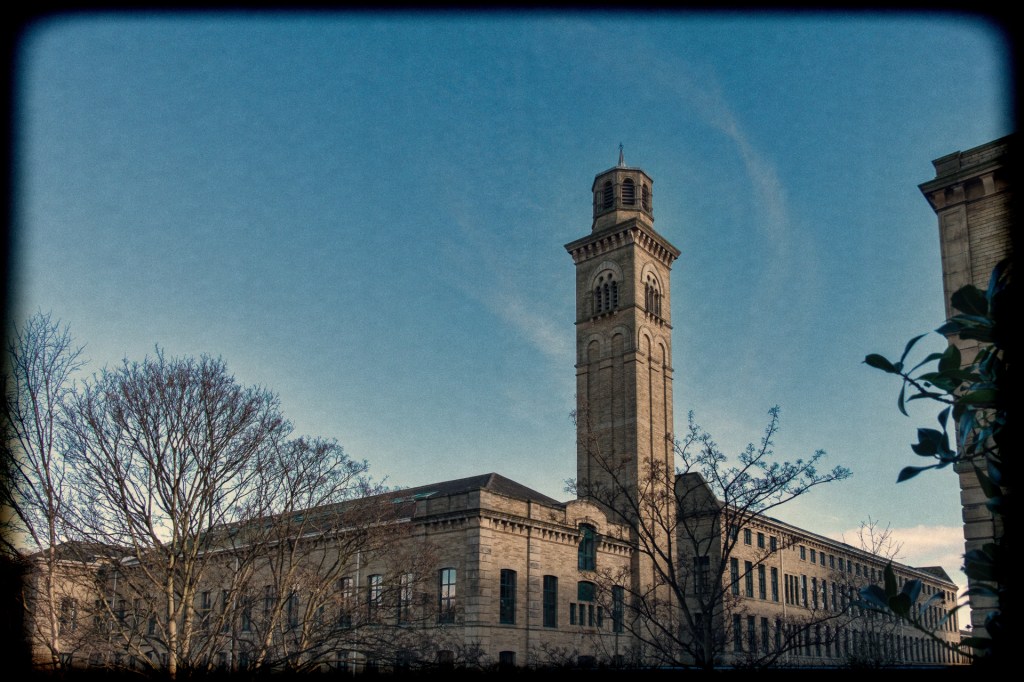
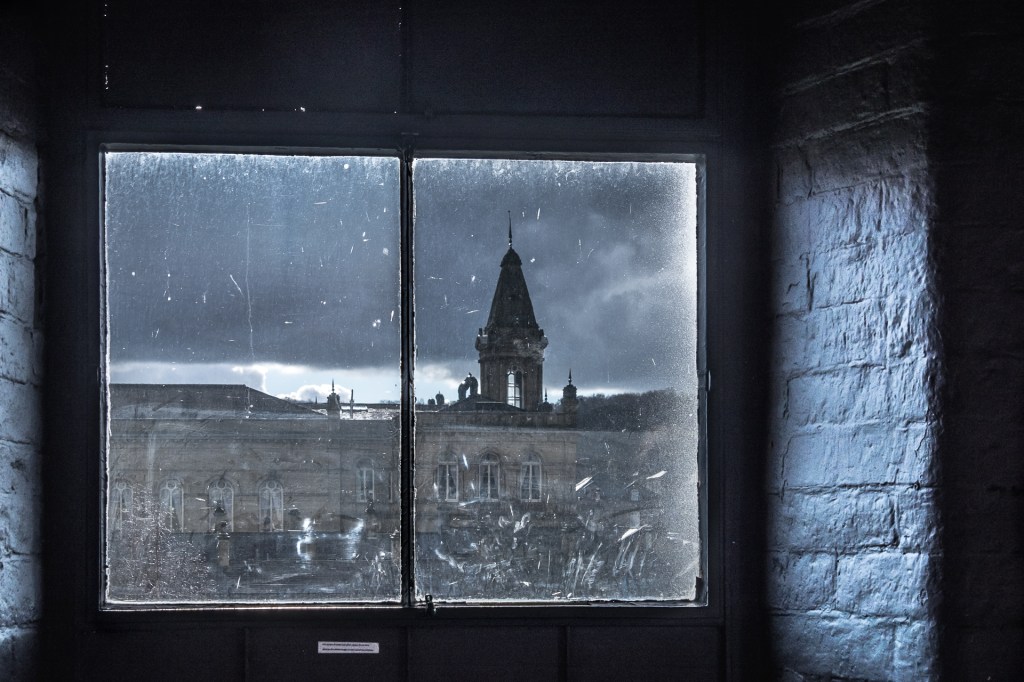
Here are just a few of my images of Hockney galleries, Mill and village.

Posted in Artsy, family history, History, Locality, Photography, Random | Tagged , , , , , , , , | Leave a comment

Frank Edmund Dobson: Life and Legacy in Industrial England

I noticed it is the anniversary of my paternal great-grandfather’s death today and realised I have little or no understanding of him as a person and scant information beyond censuses and basic records. In part, this is no doubt because his son, my grandfather, died when my dad was only 4, and there seems to have been no connection maintained with the rest of the family at the time, though some reconnection took place in recent decades, thanks to a half-cousin’s genealogy interest. In part it is also that he was a working-class man in a busy, growing city, no doubt with little leisure, and few chances to make more of a mark given his place in society. He did, though, have a family who left their imprints in various ways.

I thought I’d just take a few minutes to review the bare bones that I do have as a little recognition of Frank and see if I can flesh them out a little more in future.

Frank Edmund Dobson was born on 6 May 1851 at 5 Holborn St, West Derby, Lancashire, to John, a basketmaker and Mary, née Copson and a ribbon weaver when they married. Frank was baptised at the Parish Church of St Peter’s, Liverpool on 26th May 1851.

In 1863, when he was 12, he lost his younger brother,  Ishmael Alfred, aged only 9,  of chronic bronchitis and his mother, Mary died at 6 Hanover Street of phthisis (TB, also then rife) the following year, so he knew loss at an early age, as so many did then.

In 1871 Frank is still living at 6 Hanover Street with father John, older sister Hagar and 2-year-old nephew John Wm Ernest (son of Frank’s elder brother John).

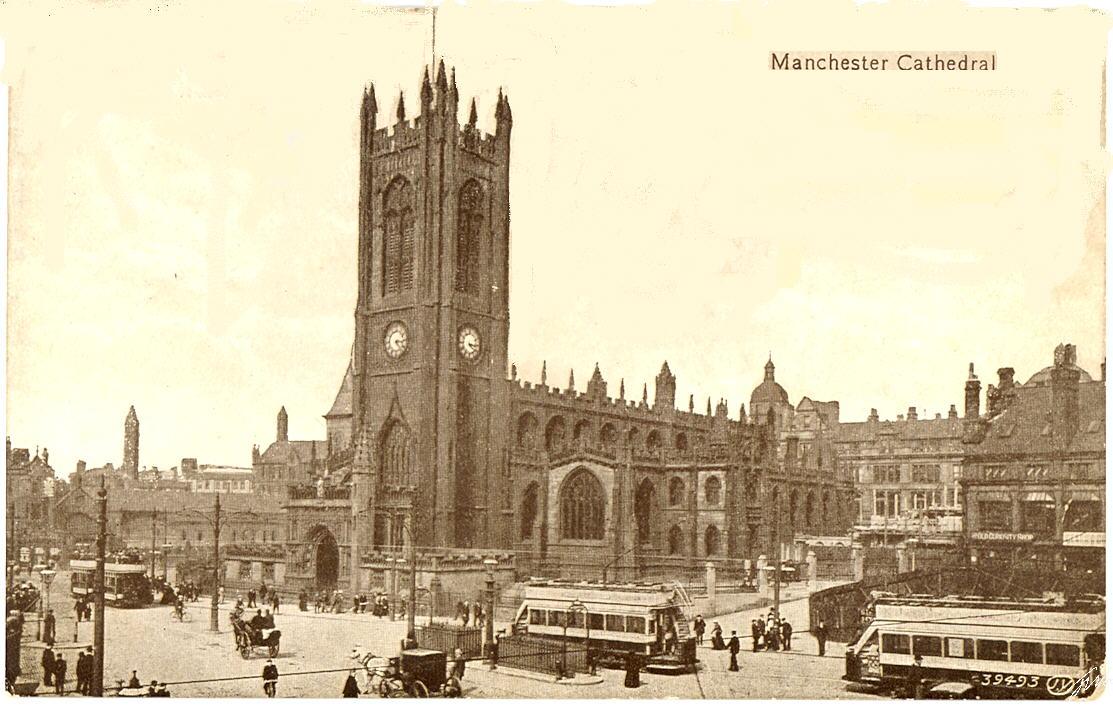
Frank married Jane Elizabeth Ellen Chadbourne on 27th April 1873 at the Cathedral and Parish Church (St Mary, St Denys & St George) in Manchester. Jane’s address on the marriage registration is 6 Holborn Street and Frank’s given as Buckingham Street – whether accurate or to apparently preserve the proprieties I do not know. He is a skip maker, as is his father John. Elizabeth’s father, another John, is listed as a labourer.

I also don’t know how they had met: Jane, born and brought up in Worcestershire, quite near where I now live, was to be found in Bishop Wearmouth, Co Durham in 1871 (as Jane Chadburne), and presumably stayed in the north from that point on. The little I know of her story I will tell under her own name, not here.

Their first child, John William Ernest (JWE presumably named after brother John’s firstborn above who had died of typhus aged 4 in 1873) was born in March 1874. They were then living at 10 Miller Street, and JWE was baptised on 4 April 1875 at the United Methodist Chapel. (He lived, I hope, happily, to 1956, dying in Suffolk shortly after his wife.)

Second son Frank Milton Edmond Dobson came along in 1876 and was duly baptised at the United Methodist Free Church in Lever Street, but sadly died aged 4 and was buried in Cheetham Hill Wesleyan Cemetery in June 1880.

Third child David Livingstone Dobson was born in 1878, and survived to age 50, remaining in Salford apart from active service in South Africa in the Second Boer War.

Fourth son Harry was born in 1881 when the family was at 1 Bagshaw Court and, like David L, went to serve as a Private in South Africa. Sadly, he died there of fever (like some two-thirds of the casualties) on 19 April 1900 and was buried in Ladysmith. His name is on a commemorative plaque in Manchester Cathedral, and the memorial in St Ann’s Square and a couple of others – poor consolation to his family but still there to this day.

They had four more children after Harry; their first daughter, Mary Annie Dobson was born on 1 March 1883 and died on 5 October 1883 in Cheetham Clinical Hospital, Lancashire, when she was 7 months old. Her father registered the death the next day.

My grandfather Frank Milton Dobson arrived on 3 September 1884 and though he died at quite a young age, he survived his parents by some years.

Harold Chadbourne Dobson, born 8 Jan 1890 and baptised at the Cathedral in February, survived WW1 and died in Leeds in 1949. My father was actually studying in Leeds at that time but I think was totally unaware of his uncle nearby, sad to say.

Youngest child and only surviving daughter Agnes May Gibbons Dobson arrived on 29 November 1897 when her mum Jane was 45 and Frank 46. She was baptised at Manchester Cathedral on 16 January 1897.

Manchester Cathedral pictured in 1903.
Picture a little later than the children’s baptisms.

Agnes was only 12 when she lost her dad and still a young woman of only 21 when her mother died. I was pleased to find that she lived until 1972, resident at the end of her life in Lytham St Anne’s where my parents had honeymooned a couple of decades earlier again, unaware of her existence.

Frank Edmund had lost his own father John in 1894 in very distressing circumstances. Death certificate, inquest and newspaper articles reported that retired skip & basket maker John, late of 8 Cross Lane, died in Salford Royal Hospital of burns on his feet, legs, hands & body caused by “his clothing & some bedding getting on fire”. He lived for 29 hours – one can only hope with adequate sedation. Accidental death was certified by Fred: Price, Coroner for the County Borough of Salford.

To round this section up on a more cheerful note, Frank did live to see their son David married to Janet Haddow Scobie in August 1904 at St Thomas’ Church, Seaforth and JWE and Mary Agnes had given him surviving grandchildren.

Frank Edmund was living at the family home at 14, Choir Street, Broughton, Salford (and had been there since at least 1900) when he died of consumption, aged 57. The certificate shows Phthisis pulmonalis and Exhaustion as causes of death, as they were for many in our industrial cities. His passing was registered on 11 January by Jane, who was also present at his death. This last detail pleases me – they had gone through so much together and I am so glad he didn’t die alone.

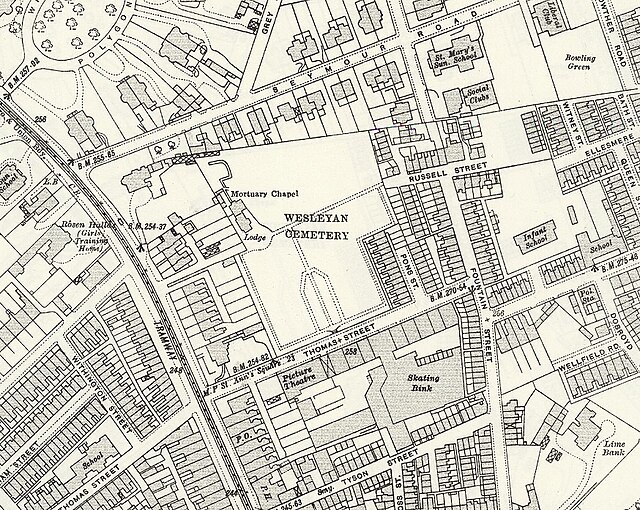
He was buried in the Wesleyan Cemetery at Cheetham Hill, Manchester on 13 January 1909, to be rejoined by Jane 9 years later.

1915 Map of Cheetham Hill area wshowing Wesleyan Cemetery.
1915 Map of Cheetham Hill area.

The graveyard was built over after a controversial removal of the remains.

Commemorative plaque for those interred 1868-1968)  and removed (controversially) from the Wesleyan Cemetery, Cheetham Hill.
Plaque in memorial garden, now a Tesco car park.
Posted in family history, History | Tagged , , , , , , , , , | Leave a comment

Worst day of the war…

Taking a look at a branch of my husband’s family tree, I had previously noted the death of a 30-year-old man, Private 17400 William J. Horton, of the Gloucestershire Regiment, at Loos, France, on 25 September 1915. He left a widow, Rosa, and three young children, but beyond that I had few details.

I came across a blog today that listed him along with 10,291 others who died on that day, the worst day of the war thus far. So many casualties, in fact, that the blog could not list them all on one post – this is just part two. This prompted me to look more closely.

The CWGC site describes the four Battles of Loos including this one.
“The battle plan for Loos was approved in July 1915 by the commander of the British First Army. It was to cover a 10 km front, and the British assembled six infantry divisions (60,000 men) to face two German divisions (approx. 30,000 men). Allied heavy artillery went into action at 5.30 a.m., and the British army used poison gas in combat for the first time on French soil to support the infantry’s advance. “

“Two divisions (the 15th Scottish Division in the north-west and the 47th Division in the south-west) were deployed in front of Loos and took the town at heavy cost on 25 September 1915. The British continued the offensive on 26 and 27 September with several assaults, relieved by French troops on 29 September. “

“The offensive was halted on 14 October, but fighting continued until 19 October. Loos was back in Allied hands, at the cost of 60,000 British wounded, missing, and dead. The Battle of Loos definitively entered British history.”

This put William’s death into its sombre context for me and encouraged me to look further into what happened to the family. My husband had remembered that some Horton members had gone to the USA and sure enough, I found that Rosa had gone to the States and remarried. I now have a new line to follow and some more positive outcomes to report to my husband…

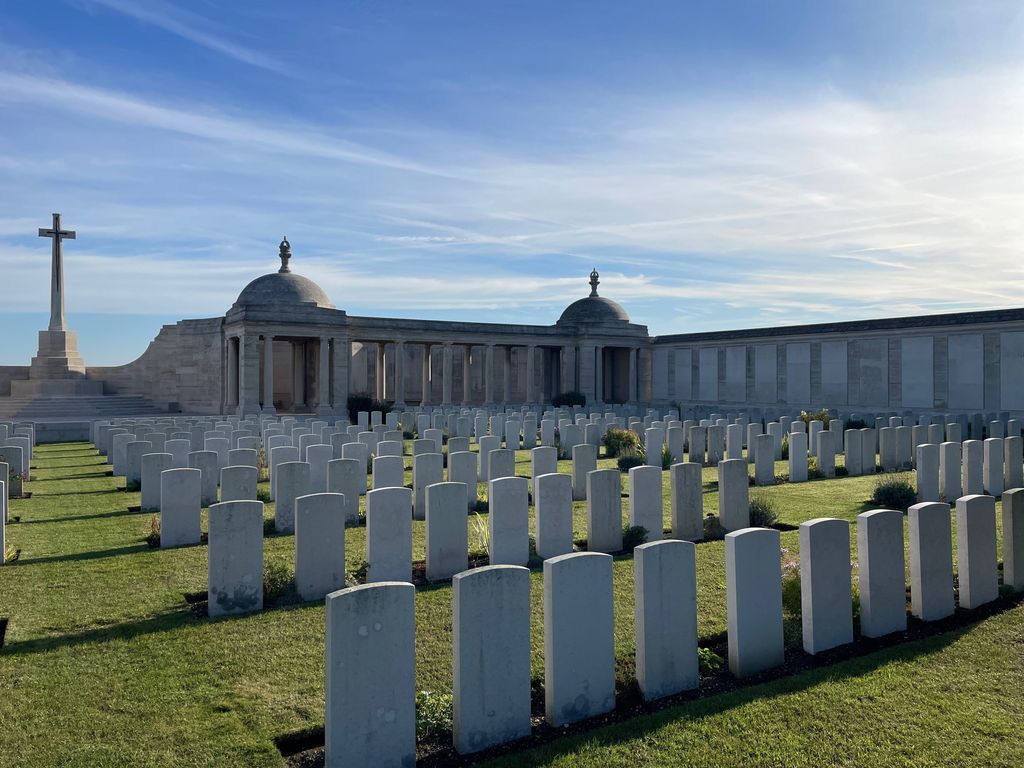
Loos Memorial courtesy of Terres du nord on Find A Grave.

Posted in family history, History | Tagged , , , , , , , , | Leave a comment

Thank you, Martin Parr.

I was sad to see the news of Martin Parr’s death yesterday. I have come to appreciate and enjoy his work, much of which was documenting the ‘tasteless cheerfulness’ of what he saw. His work has been controversial at times, from his ‘signature’ use of bright colour to the subjects he chose. I never found his work quite as cruel or intrusive as that of some photographers, feeling that the images were underpinned by a wry affection for our collective human foibles – along with a good eye for the ridiculous.

I worked for a number of years in the Black Country and thoroughly enjoyed his Black Country Stories; I felt the engagement he had with the subjects and community did shine in this. (So sad that The Public, the art gallery where the exhibition was held, and which did much to develop public engagement with the arts, was closed not long after.)

His Oxford series also resonated, having studied there (in the days when women were only 1 in 10 of the student population which was even more public-school dominated than today). Other work I enjoy in a less personal way and there is some, as with every artist, that doesn’t move me particularly or that I don’t take to, for whatever reason, but still may admire.

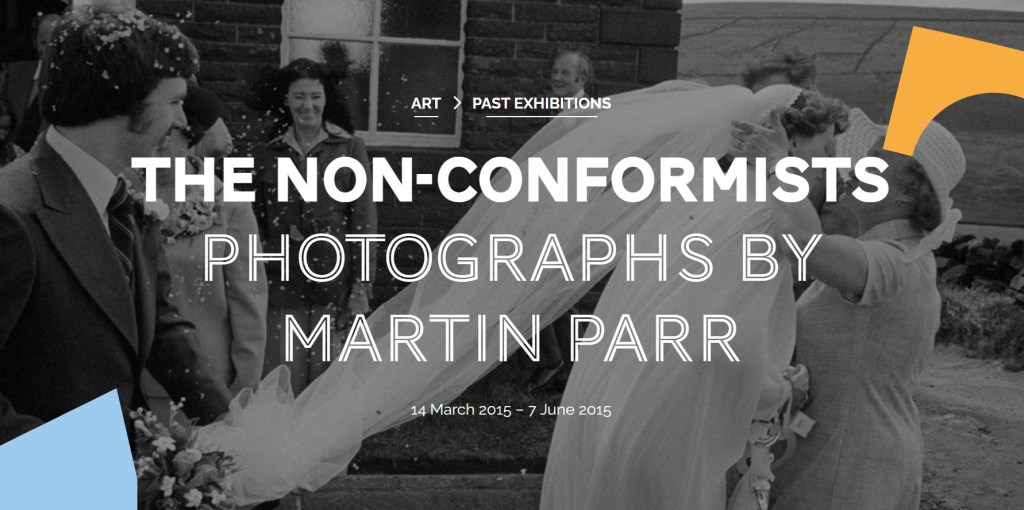
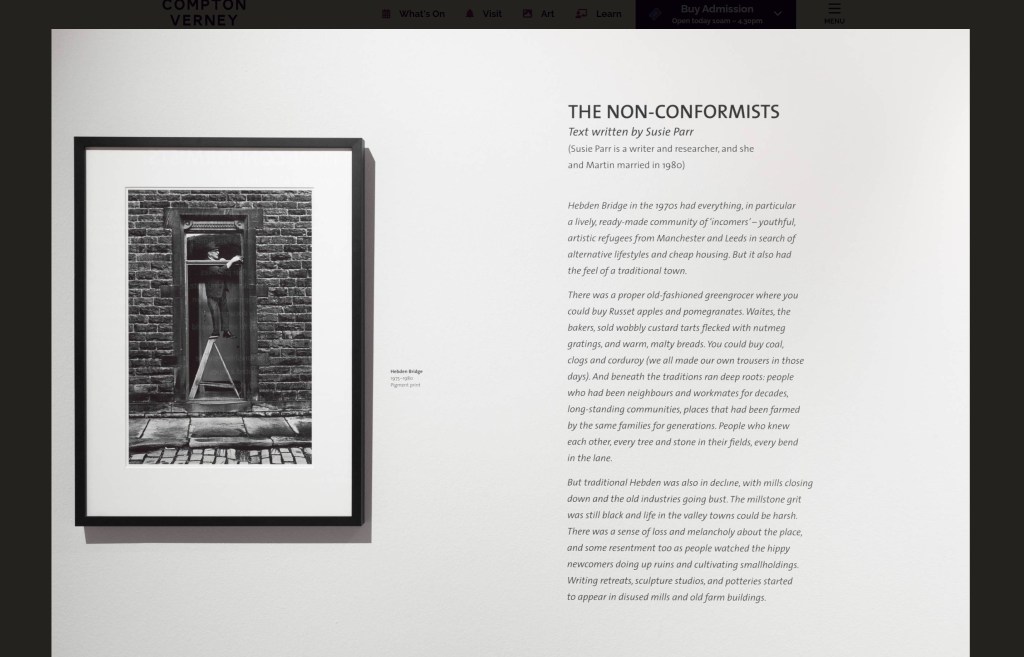
One set of images however, simply stopped me in my tracks, ten years ago now. We went to the splendid Compton Verney gallery to see The Non-Conformists, a very early body of work he compiled with Susie Mitchell, later his wife, from 1975 – 80. Her words, combined with his images captured some local, disappearing communities and their lives, the Hebden Bridge ‘chapel’ folk much like our family and those I grew up with in the nearby Halifax area, our lives puctuated by the Methodist chapel calendar, from Boys’ Brigade nights to fetes and fundraisers via two services and Sunday School classes every Sunday. My oldest memories are from almost two decades earlier, but the lingering vestiges of that world are here for me, vivid as ever.

Compton Verney 2015 Exhibition information – have a browse…

To younger people or those hailing from very differing communities this might mean nothing but a passing monochromatic glance into a now-distant past. To my eternal surprise, I found myself being literally reduced to tears as I ‘recognised’ the essence of family and friends in the the chapel stalwarts at the Anniversary celebrations and preparations (recalling my great-aunt’ s serious Sunday hat and rag rug made of family memories), remembering freezing at a cousin’s winter wedding at a moor-top chapel, and a furtive tear even rolled down my cheek at the gentleman nonchalantly perched one-legged on the stepladder, dapper in his suit, tie and hat, cleaning the fanlight glass above his front door, an unwitting representative of an entire generation and lifestyle captured for posterity.

I didn’t just see those chapel interiors, I could smell again the faint lingering dust, polish and flower scents, hear echoes of rousing Wesleyan tunes and wheezy organ, see the sidesmen with the wooden collection plates… The exterior shots brought with them a smell of chimney smoke, November fog and damp woollen coats.

Compton Verney 2015 Exhibition information

If Martin Parr had taken no more images than these, he would have left a creditable and significant piece of history and ‘done right by’ those Yorkshire Non-Conformists he and Susie documented. Yet this was only the start. How many others will look at his collections and feel that visceral reaction of recognition of a vanished or vanishing community? Not to mention the wry smiles and generous laughter with, rather than at, some of the absurdities of life then, as now.

Have a nice rest, Martin.

INT You’re obviously not afraid of death, are you?
MP Not particularly, no. It would be a nice rest.

Posted in family history, Locality, People, Photography | Tagged , , , | Leave a comment

Centenary (and a bit)

I discovered this just a few days too late to share it on their 100th anniversary!

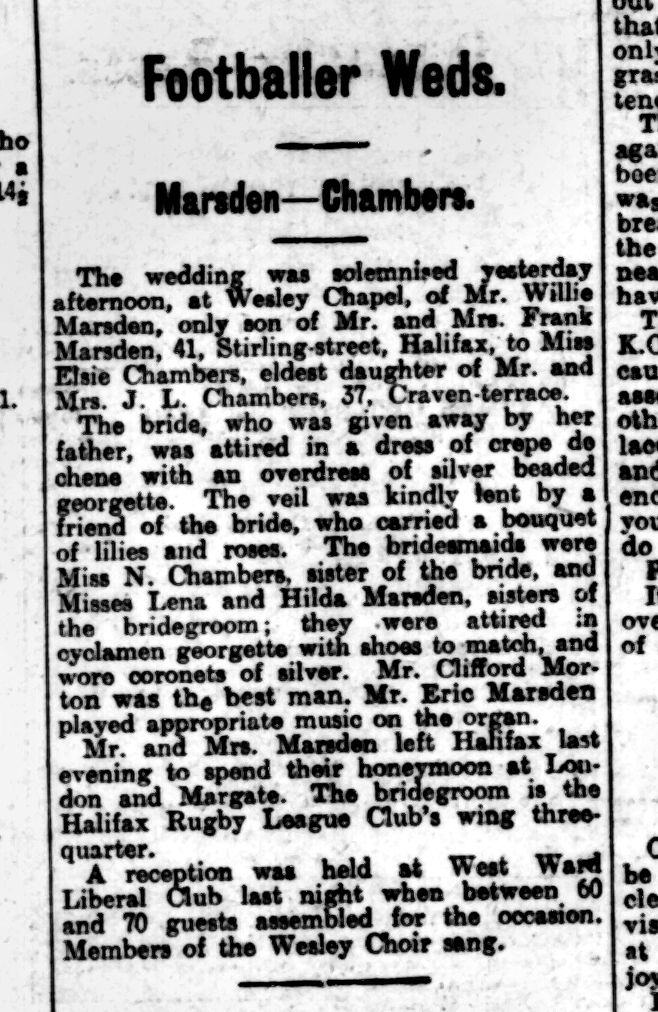
My great-uncle Willie married his first wife on 9 September 1925. My grandma was a bridesmaid. I don’t have any pictures but there’s quite a detailed description in the Halifax Courier of 10 Septemberwhich was lovely to find. (Courtesy of Find My Past). Sadly, they only had 10 years together as Elsie died in 1935.

Posted in family history | Leave a comment

Brief Encounter

A blurred impression of a woman walking by, just the lower torso in a turquoise dress, and calves, with arm and hand nearest the camera in motion too.  The bluey-green pale tones predominate, with just the flesh tones varying.

Posted in Artsy, Photography | Leave a comment

Starry night?

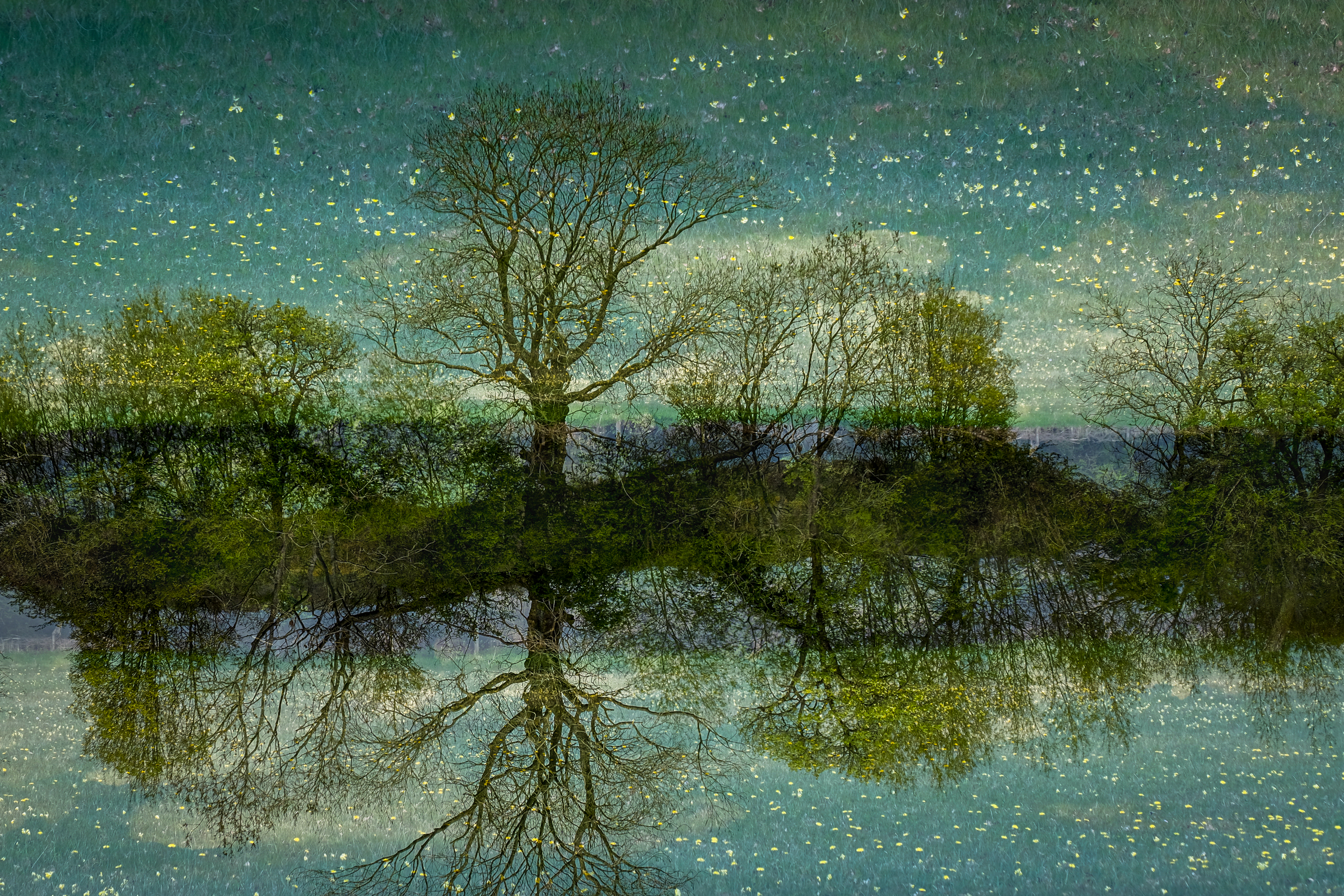
A picture taken in a local nature reserve; Eades Meadow is a lovely, restorative place. In this in-camera double exposure the glorious May flowers are like stars. Sweet dreams…

A double exposure image (flipped 180 degrees) of trees in a meadow with the spring flowers looking like stars. in the new 'sky'

Posted in Artsy, Locality, Photography | Tagged , , | Leave a comment

Absent friends

I lost one of my oldest friends earlier this year and am still heartsore. We were very different characters and often on opposite sides of an argument. We met at secondary school and went to the same college at university but after that our lives went along very different tracks and always geographically distanced.

I recently re-read the lovely poem she wrote and gave me for my 50th birthday and decided I wanted to share it more widely; whilst the detail of it may not make much sense to others, I think the intent and message are clear. That’s part of the pain of loss, isn’t it – that shared background and fabric of one’s life becoming vaguer and more one-dimensional when there is no-one around who shared the same experiences? It gives me some consolation that I can feel our friendship shining out of these few verses more eloquently than I can say.

FORTY YEARS OF RUTH

A ruby, a rose, a Ruth,
Which would I rather have?

Let me see the thick long plait
From my tall solemnity,
Deep eyes and heart,
Three generations of Bradford
Are grounded, know the place.
An African blond doesn’t fit.

Yet she sounds like me.
She knows the place, has a view,
Speaking Swahili and
Knowing the words to Ilkley Moor b’aht tat!
The common ground appears
And maths equations bind.

Kafka perturbs us both.
The Stuarts lead to understanding
That teachers are less wise then god
And studying Catullus
Is not so easy
In an all girls school.

How bright we seem,
Growing up, exams we walk
To Oxford and Cambridge,
To Lady Margaret’s Halls
And Wadham College bar
Via Köln, Stuttgart und Berlin.

She heals my veins,
Consoles and weeps on me,
Nearly drowns me,
And mocks me rotten.
We hunt the glorious asparagus
And talk the world till dawn.

Through relationships and death,
Working hard, moving away,
Too busy, too tired,
Long silences and the odd birthday card
The core is stretched to spring back again
Stronger, shorter and more dear.

This poem is short for forty years
Too raw for artistry
Not sweet enough for a rose
And weaker than true ruby red.
Well bugger that
It’s just right for me and Ruth.

Gillian
2005

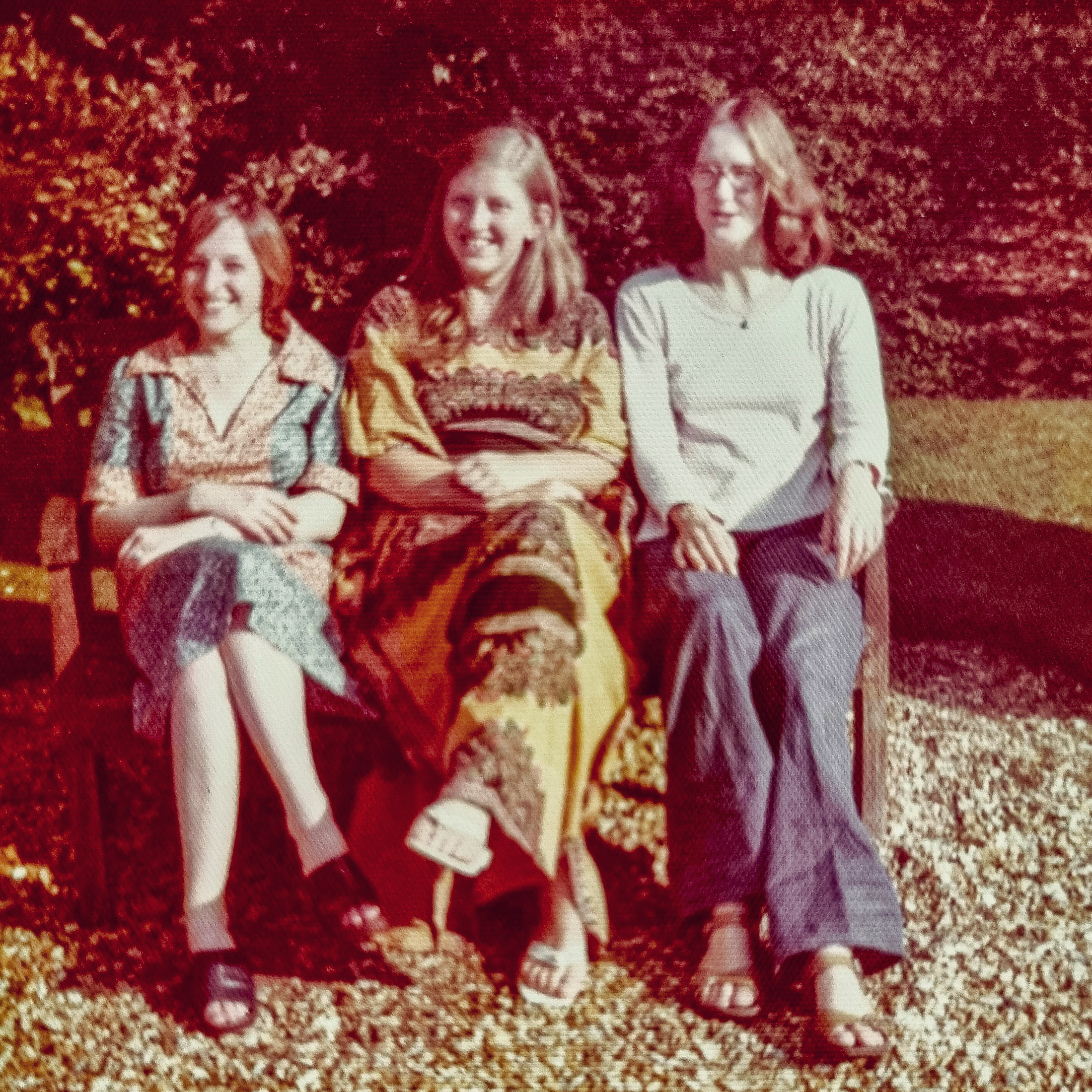
Lady Margaret Hall 1976. Clare, Ruth (me) and Gill
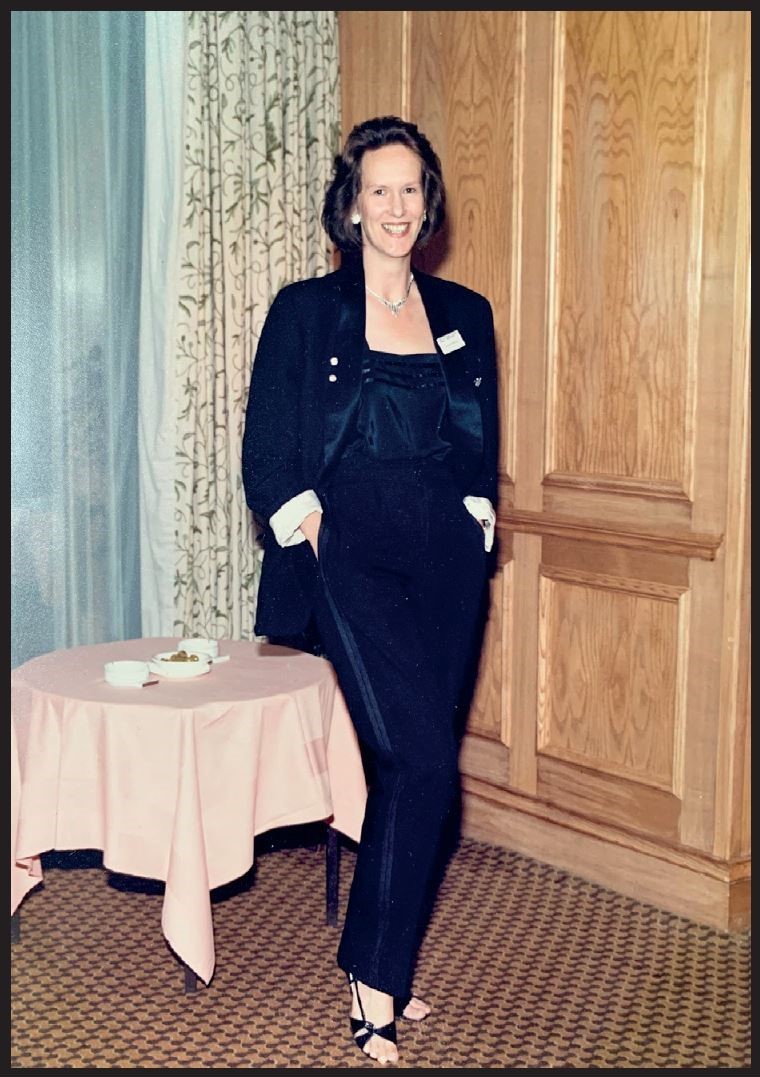
Gill at work, London 1980s
Gill in our garden with Stewart, 2023.

Posted in People, Poetry | Tagged , | Leave a comment

Connections…

One of the pleasures of interacting on the web is making connections or re-connections with people you’d probably not otherwise come across. Thanks to t’internet and having shared a few random memories, I now have had contact with three people around the world who went to the tiny ‘dame school’ I attended for a couple of years in Nigeria. Here is a snippet from the memoirs of a much more organised writer than I am… Enjoy Paul’s memories of Bukuru, near where we were in Kuru.

Posted in A Nigerian Experience, family history, Reblogged | Tagged , , , | Leave a comment

A poetic delight – enjoy!

Posted in Locality, Poetry, Reblogged | Tagged , , | Leave a comment