

Happy Anniversary!
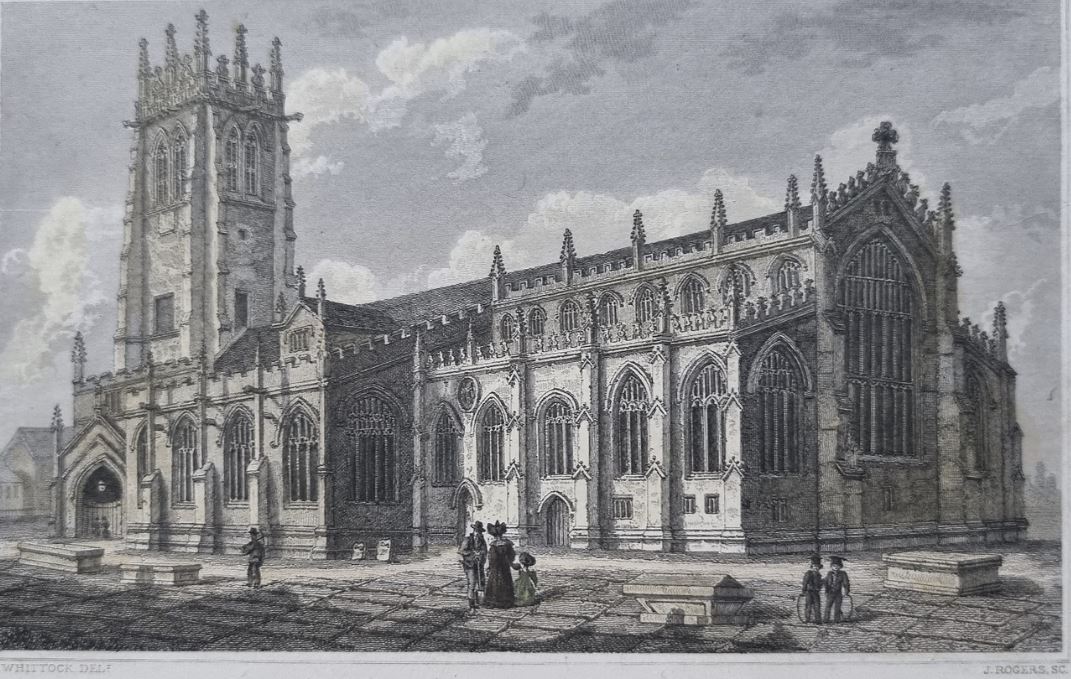
On Monday 16th October 1893, Frank Marsden, 22, married Sarah Helliwell, also aged 22, in Halifax Parish Church (St John the Baptist), now known as Halifax Minster. (The interior had been restored only a few years previously by George Gilbert Scott and his son John so would have looked quite spiffy!)
Frank was a greengrocer, of Green Lane, Halifax; Sarah’s given address was Church Street, Halifax. No occupation is given for Sarah on the certificate, just the status of spinster, though in 1891 she is in the census as a worsted reeler. Her father, John, is listed as a mechanic (in 1891 he describes himself as a dye works fitter) and Frank’s late father, Jonathan, as a greengrocer. John and Lily Helliwell (Sarah’s sister) were the witnesses.
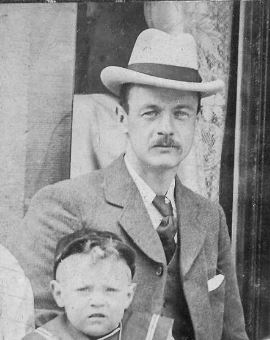
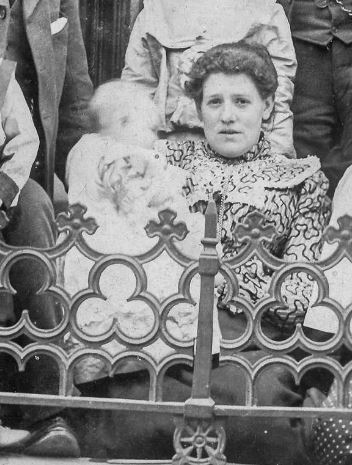
I’ve not found anything further about the wedding unfortunately, but there is a family photo taken some 10 years later from which I’ve clipped Frank and Sarah to celebrate their anniversary. I never met this couple, my great-grandparents, but do know from the next generation how much they remained at the absolute heart of their family and how much they were loved.
The featured image of the flowers at the head of this post is from a family wedding last summer – I thought that reflected a nice link to the present and sufficed to commemorate their anniversary!
Share this:

140!
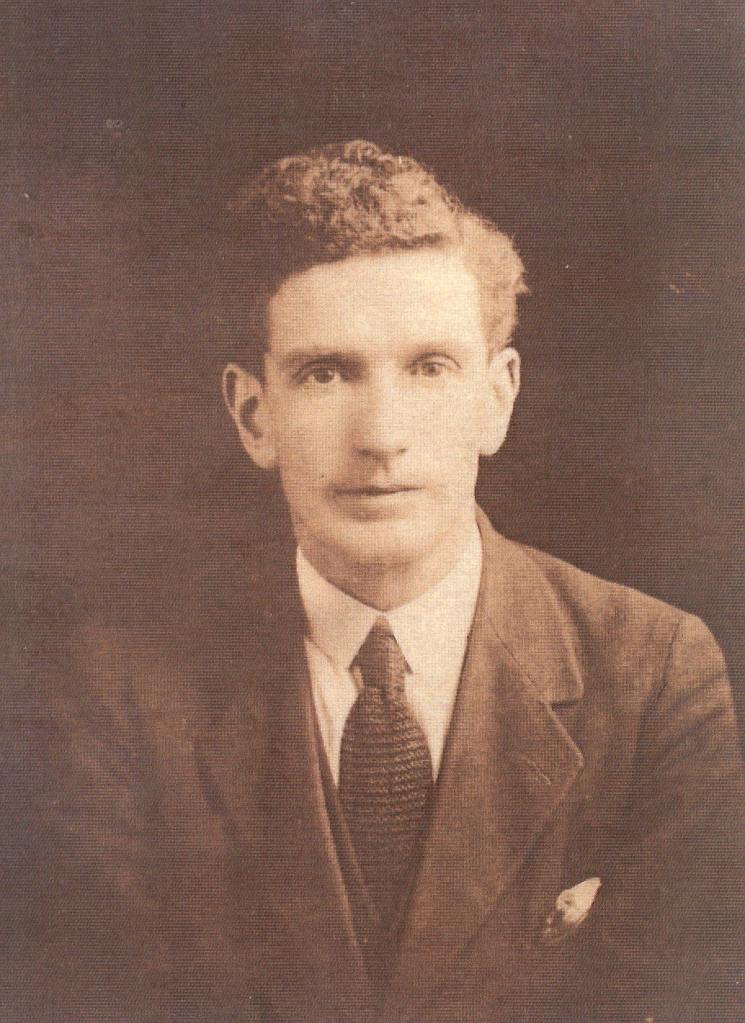
I was reminded when logging on to do some transcription work for a family history society that it’s 140 years ago today since my paternal grandfather Frank Milton Dobson was born. As I really need to crack on and finish the job I originally set out to do, this will necessarily be fairly brief, but I couldn’t let it pass without popping up a brief recognition of the date. We were never big on those sorts of anniversaries in our immediate family, but I’ve become much more aware of them since starting, albeit in a bit of a disorganised and desultory fashion, on the family history!
I’d always assumed we were Yorkshire Tykes through and through, so imagine my surprise to find Frank was born not in God’s Own Country, but, shock, horror, on t’other side of the Pennines, in Manchester! His father Frank Edmund was a Master basketmaker or skep maker; his mother Jane, I was equally surprised to find, originally hailed from only about 10 miles away from where I now live, in Worcestershire. Frank M. was the 6th of 8 children and he was christened in Manchester cathedral, not far from Bagshaw’s Court where the family home was.
Even my father and aunt barely knew Frank as sadly, he died when they were only 5 and 3 respectively. This probably explains why I don’t recall any conversations about Frank when I was young. It was only after dad’s death that I discovered there was an entire step-family, with whom there’d been no contact, from Frank’s first marriage to Ellen Louisa, but that alone merits another tale, thanks mainly to members of that side of the family who got in touch some years ago…
Frank and my grandmother married in 1926, some time after he had been pensioned off from the army for ill health, and he is listed on the marriage certificate as a Tailor’s presser. As Gran was a seamstress (as were a couple of her sisters) it might perhaps suggest how they originally crossed paths. They had only a few years together, and from a cousin of my dad’s I gather that for some of that time he was away. He died, aged only 47, of double pneumonia and phthisis (TB) in hospital in Halifax in 1932.
I still have a bit of work to do on filling in some of the gaps in his documented history and will, I hope, record some more of what I have discovered, but for now suffice it to say of the granddad I never knew that it’s been interesting getting to know more about him from the jigsaw of bits that are available. From the very few photos I have, he certainly passed on a strong family resemblance to some relatives; not sure I’m too happy that I seem to have got the ears, though!
Share this:

Serendipity
Trying to plan an itinerary for a Saturday outing in the Gaillac area, I came across the Château-Musée du Cayla. I’d spotted signs in passing on holidays in past years but never taken the plunge to visit.
On looking it up, it is a writers’ museum, the former home of Maurice (1810-1839) and Eugénie de Guérin (1805-1848), a brother and sister who were both writers, Maurice becoming a Romantic poet.

Given that these both fell into a distinct gap, or fair to say, chasm, in my education, a lack of enthusiasm for Romanticism and Stewart’s lack of French, I wasn’t sure how interesting a stop it would be but it had one huge and rare advantage – it was open throughout lunchtime!
We wiggled our way to the site near Andillac and up to the parking at the top of an excitingly serpentine & unhelpfully gravelly drive as my knee was not going to cope with the walk up plus the anticipated steps in the Château. We were helpfully waved in by a young man who copped me wimping on the last gravelly and precipitous turn, even with 4wd!

The first set of images and quotes from Eugénie’s letters & journals next to the reception all focused on garden produce and foods, so that was promising!

A pleasant young man at reception apologised that he couldn’t offer the tour in English and as we were the only customers, was quite happy to adapt the tour to our limited mobility if need arose. He also kindly grabbed a couple of folding stools and brought them along for us or advised where we were allowed to perch while he spoke.

The house is not huge, a ‘gentleman’s residence’ dating back to 1452, now set in 27 ha of grounds. The Guérin family married into the estate in the 16th century. As was usual, the estate was pretty self-sufficient, surrounded by agricultural land that produced much of what they needed, whether food, meat, wood or textiles.

Our guide told the story of the family very engagingly and we were well invested in them. Their mother died young and Eugénie took Maurice very much under her wing. She and sister Marie were allowed to attend the lessons given to brothers Rambert and Maurice, the latter being a gifted linguist and student, going to Toulouse aged 12 to study for the priesthood, thence to Paris where he decided he wanted to write and persuaded a friend to tell his father!
I won’t reveal all, but will say that the prodigy Maurice’s innovative prose poem The Centaur and his other writings did not bring him instant success. Eugénie corresponded with him and their letters survived.

Maurice contracted TB and returned home not long before his 29th birthday to be lovingly tended by Eugénie for a couple of weeks until he passed away.
His sister continued the journal she had kept, leaving instructions to destroy it on her death, and lived on in the family house. Sadly she only survived him by 9 years.
Friends promoted Maurice’s work after their deaths and he was championed by George Sand. Their sister Marie was approached with a request to publish Maurice’s work and Eugénie’s letters; Marie agreed and decided Eugénie’s journal should also be published. Both gained posthumous fame.
The house is presented generally as it would have been in their day, with some artistic installations enlivening the setting.

It was a pleasure to ‘meet’ them and share a little of their lives. I think our favourite room was the cabinet of curiosities we were left to explore at the end.


The grounds are extensive and various walks are marked; it’s a wonderful setting for a charming little gem.


Share this:

Posted in Houses & Gardens, Journal, People, Travel
Tagged Cayla, France, Guérin, poet, Tarn
Leave a comment
Changes
We meandered towards Gaillac this morning and visited the Château de Mayragues for a brief wine tasting and a few bottles to take home. The 12th-century château-fort has been restored from a ruin: the owners bought the vineyard and its noble ruins in 1980 and have undertaken a labour of love in renovating the house (& fine pigeonnier) and effectively restarting the 13ha vineyard in many more hectares of estate. Work continues with new developments in the winery barn, an imposing building in itself. There are a couple of chambres d’hôtes, which we’d not realised.


The owner proffered tastings of all the wines including a dessert wine and a double-distilled spirit which I will try another time, I hope. I tasted (and bought) the only current dry white, in part as it was a very local variety, Loin de L’Oeil or as it’s marketed, Len de L’El (Occitan). Apparently it’s so called as the bunches hang high on the vine – far from the eye. It’s distinctive, dry and floral; a taste of summer.
A still and a sparkling rosé (Duras) were both very pleasant though I didn’t find them as distinctive, being perhaps too eager to try the reds!
The first of the reds, a 2023 mixed grape vintage from the survivors of a late (April) frost which seems to be becoming a regular feature, was then a perhaps serendipitous outcome with plenty of flavour, though the lightest of the 3 on offer. We enjoyed it and it was good to try a straight Duras as well after a longish gap but were in the end persuaded by the Les Mages, a Braucol & Cabernet Sauvignon combo from 20-year-old vines; rich, complex and flavourful. Come home with me, Les Mages!
The vineyard has clearly changed under these owners, who produce more varieties with smaller vats than were there originally. They have adapted to the late frosts of recent years and are looking at older varieties again to withstand both frosts and hotter, drier summers. The harvest is a month earlier than it used to be.
Madame said ‘We know we’ve had hot summers in the region before and come through’. I thought she was about to mention the mid-1970s, but she continued, ‘The 1500s were really hot.’ Clearly they really do learn from the past as well as making changes!
When we quaff these few bottles with friends & family in coming weeks, we shall enjoy the memory of the beautifully restored château-fort, a sunny July outing, an errant bluetit flying into the ‘chai’ to join the tasting (and fortunately find the opened window to depart without incident or injury) and the pleasant chat about the many vagaries of vineyards.
Merci à Mayragues.
Share this:

Posted in Food & Drink, Houses & Gardens, Travel
Tagged climate, France, Gaillac, wine
Leave a comment
Blooming
Our friend Colin’s garden in Saint-Grat is blooming and colourful. The weather cooperates with timely if not entirely welcome rain. Shirley’s lilies are on their way to their full glories….


Share this:


Spring

Share this:

Snapshot memories

My much-loved late uncle, Nigel, had this treasured but rather battered photograph that he was rightly proud of and which we were pleased to be able to digitally restore for him some years ago.
It shows him at RAF Digby, in Lincolnshire, one of our oldest RAF stations, in October 1952. Flying was stopped there in January 1953, so he must have been in one of the last trainee contingents through there.
I should have dug out more information at the time but Wikipedia added to my very limited knowledge of the base:- “Following the end of World War II Digby increasingly took on a non-flying role for RAF Technical Training Command. … Between 1948 and 1950 Digby also became home to the No.1 Initial Officer Training unit, the Aircrew Education Unit, the Aircrew Transit Unit and the Instructional Leadership Course. In 1951 No. 2 Aircrew Grading School for both potential pilots and ancillary aircrew was established at Digby using a wide range of elderly aircraft.” I think the Tiger Moth certainly qualified for the ‘elderly’ category!
I just thought I’d take the opportunity to share what was clearly a happy moment for him on this, his birthday.
Share this:

Posted in family history, History, People, Photography
Tagged aviation, family, history, photography, RAF, royal-air-force
3 Comments
‘Doing their bit’

I found this little cutting stashed away in some files I was sorting: I must have seen and labelled it after mum died. It’s probably from the Bradford Telegraph and Argus.
A quick search showed that Cllr. Coughlin served in 1981-2 so I’ve pinned the date down thus far. Mum had been diagnosed with cancer so it was a cause close to home in every way, which she supported. Dad did volunteer work with them until he died suddenly in 1984. The War on Cancer charity merged with the then Cancer Research Campaign in 1999, I think, then came under the umbrella of Cancer Research UK.
It’s not an earth-shattering piece of news or ephemera, but I thought it deserved to see the light of day 40-odd years on as a thanks to all the good souls who put time and energy into improving the treatment of cancer patients and enabling more research.
Arnold Moore, the Chairman, set up the charity in 1975 after his wife’s death from cancer. He died in 2010 having helped raise millions for the cause, aided by the many hard-working volunteers and helpers, some of whom are pictured here. It struck me that most of them probably underestimated the sheer power of ‘doing their bit’.
In the difficult times we find ourselves in today, it’s also a salutory reminder that there are still so many good and generous people out there ‘doing their bit’ in the medical field and in so many others, and who also probably don’t realise how those ‘bits’ all add up to make a real difference.
It’s important, too, in that it gives hope to those of us who sometimes despair at so much of the awful news – and people – we see around us. It is good and healing for the soul to see, appreciate and celebrate those (volunteers and workers alike) who choose to go out of their way to help others and strive to make their corner of the world a bit brighter and better.
Thank you, each and every one.
Share this:

Posted in family history, Locality, People, Philosophical
Tagged Bradford, cancer, family, health, volunteers
Leave a comment